A deep-tech studio focused on
programmable, real-time mediaDeep-tech studio for real-time media systems
Nebular Streams is an independent deep-tech studio focused on real-time video, streaming infrastructure, interactive media, and immersive systems. We build complete products and the technology underneath them — from media-processing engines and distributed services to the applications and interfaces people actually use.
Live Media
Programmable broadcast graphics, interactive experiences, live production tools, and applications that can change while the stream is running.
Streaming Infrastructure
Architecture and engineering for real-time media systems designed to stay fast, composable, scalable, and operational under load.
Immersive Systems
Spatial interfaces, shared 3D environments, virtual reality, and experimental systems that explore new ways to create and interact with media.
Products and Projects
Nebular Overlay
Programmable graphics and applications for live video infrastructure
Nebular Overlay is a multi-tenant plug-in system for video-streaming platforms, bringing programmable applications directly into live video processing
Each tenant can maintain its own catalogue of HTML applications, configuration and state. Applications can be controlled in real time — changing content, parameters and visibility without interrupting the underlying video pipeline.
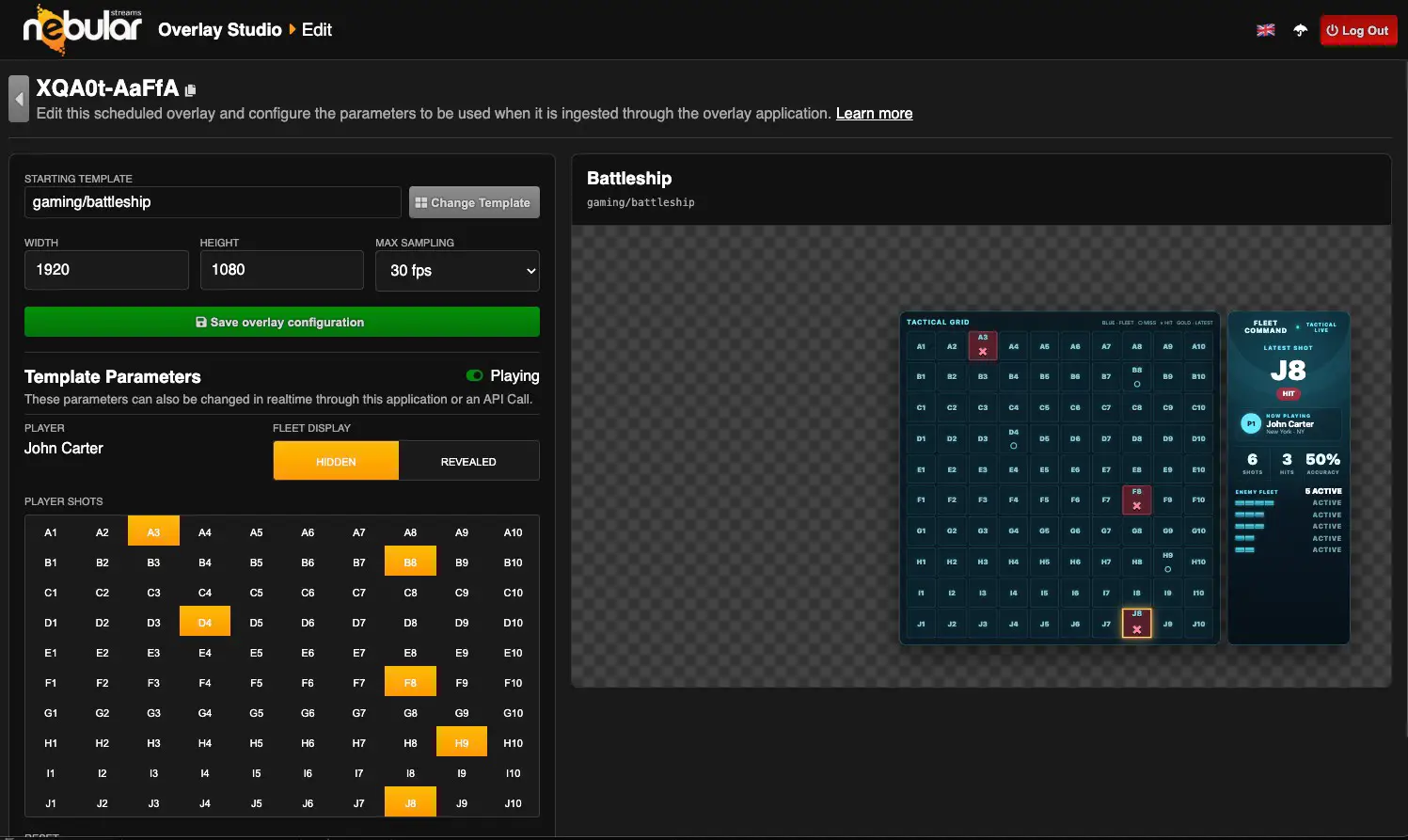
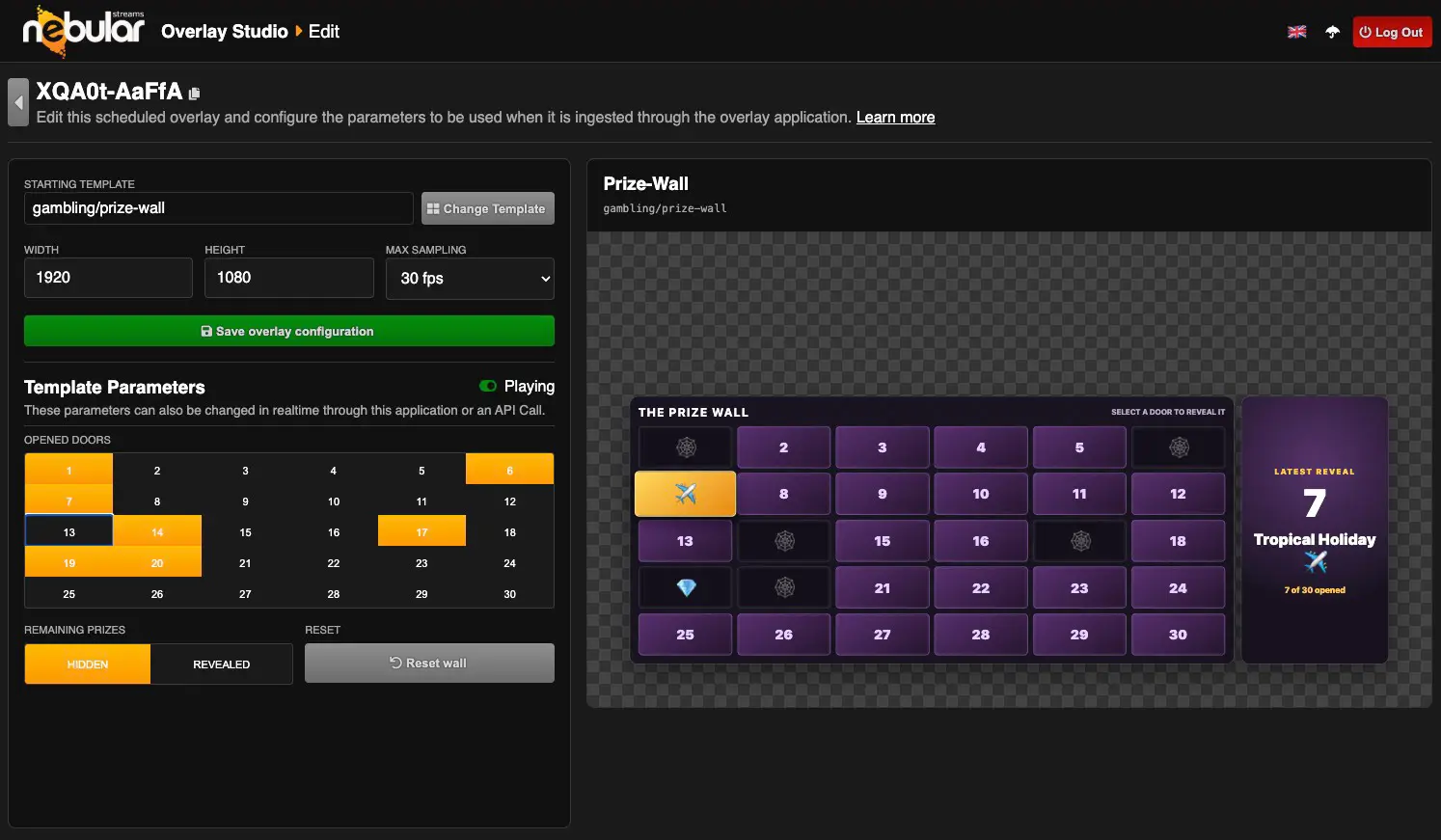
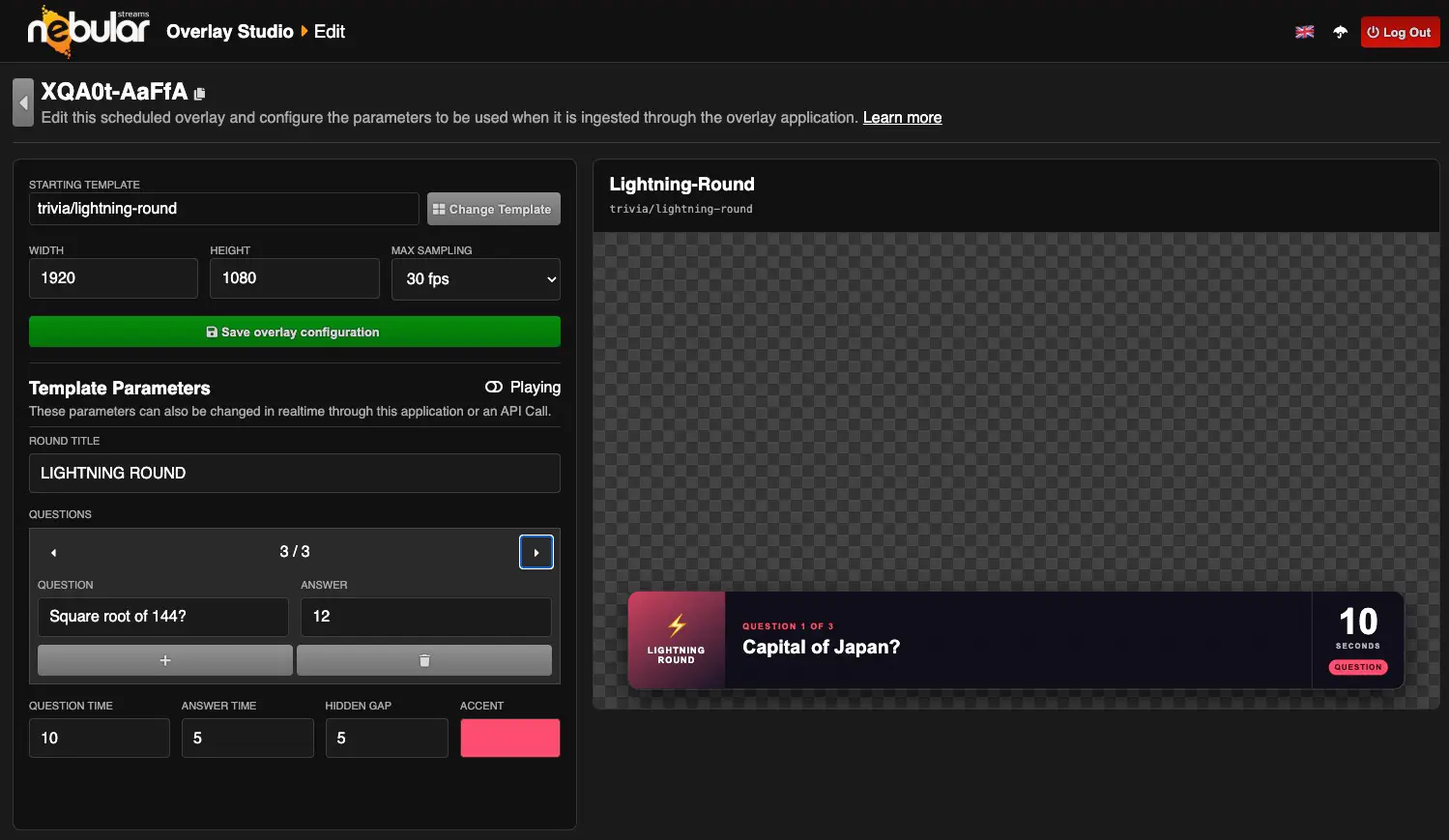
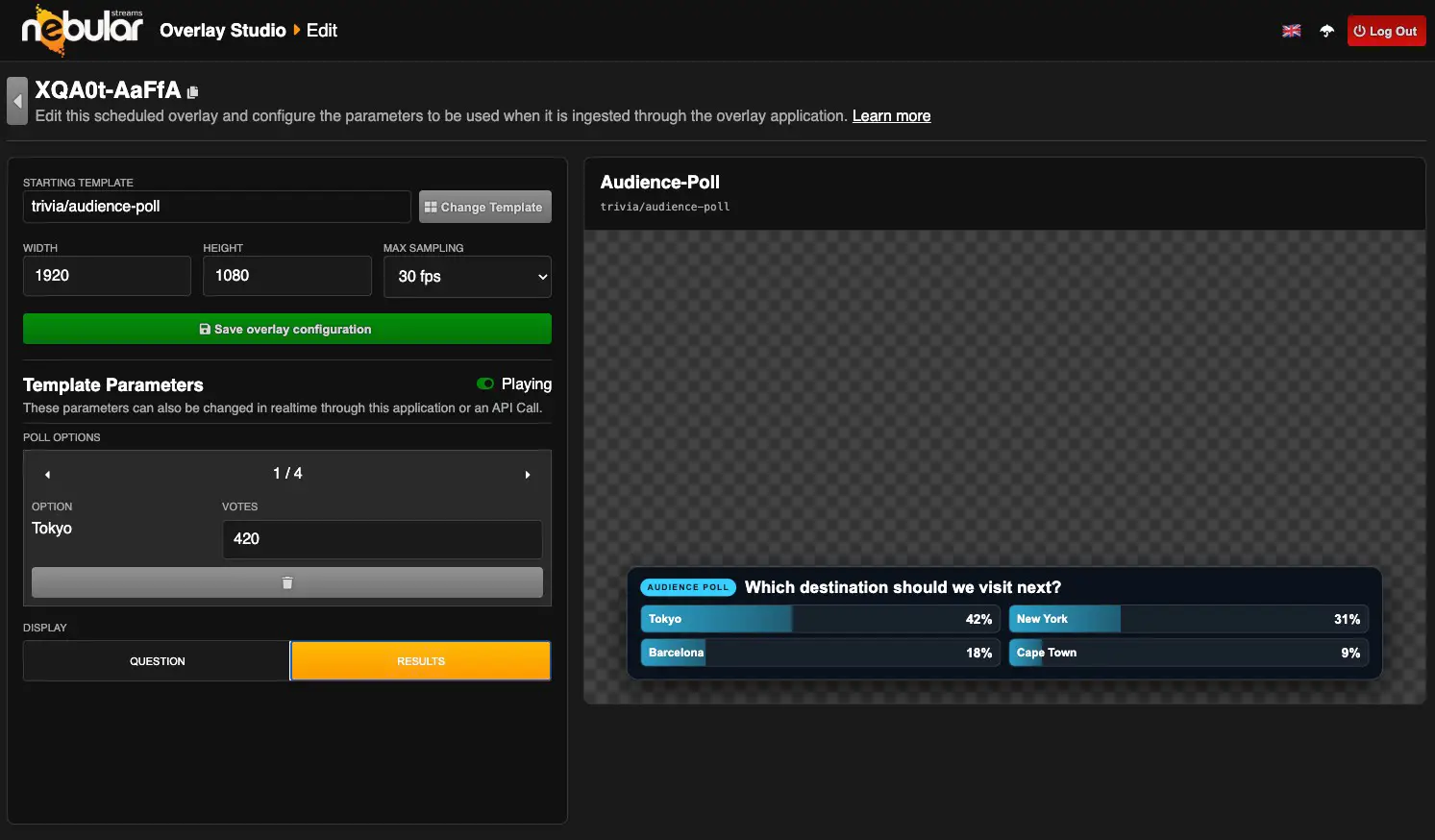
Programmable Applications
Overlays are self-contained HTML applications rather than baked-in effects. Build anything from branding and lower thirds to data-driven graphics, games, and specialized interactive experiences.
Real-Time Control
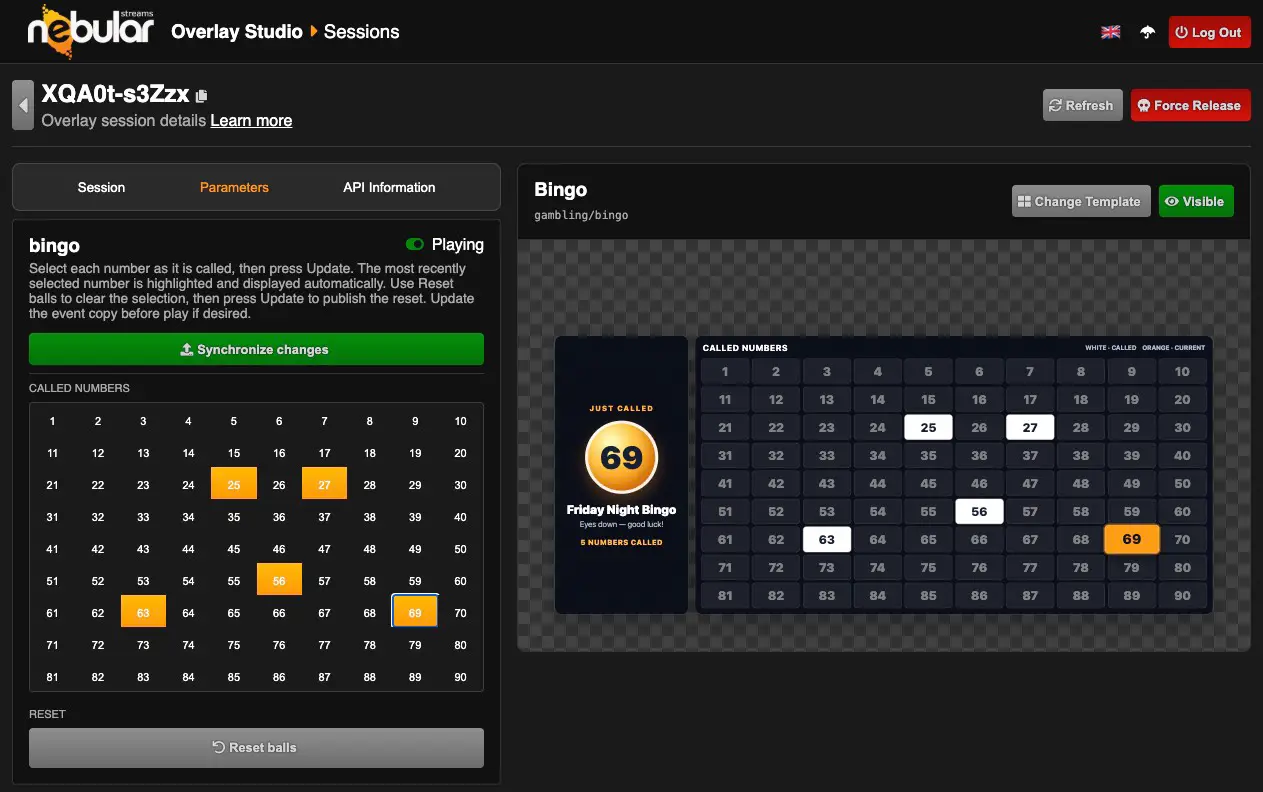
Change application parameters, state, templates, and visibility while processing remains alive. Control sessions manually or from an external system through the API.
Persistent State
Application configuration and state follow the processing lifecycle, allowing an experience to stop, move between workers, and later resume without losing its state.
The Overlay Platform
Nebular Overlay spans the complete application lifecycle: Overlay SDK provides the local authoring and preview environment; Overlay Studio manages catalogues, streams, and running applications; Overlay Server provides the production runtime and rendering layer alongside your video-processing infrastructure.
Overlay SDK
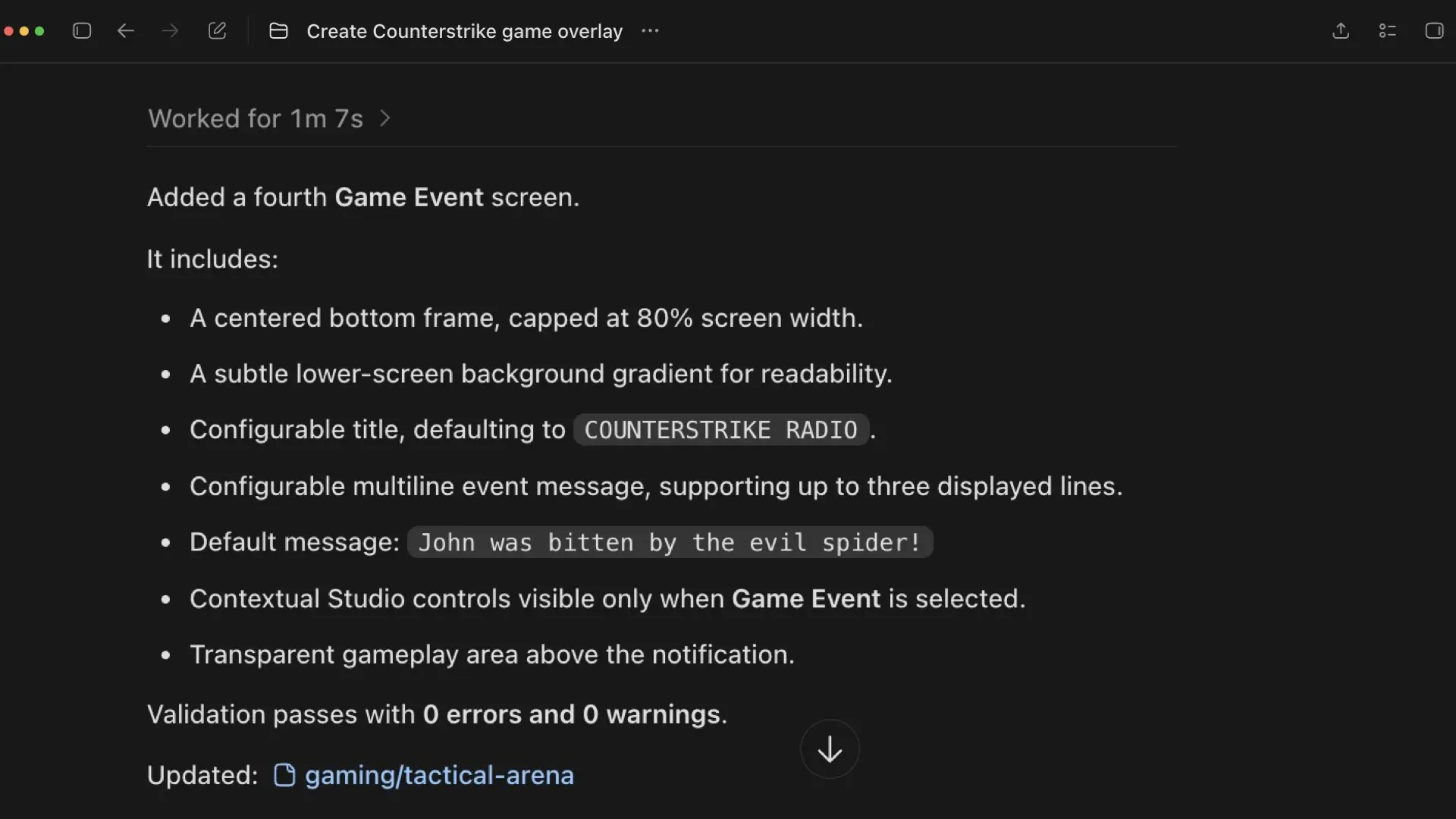
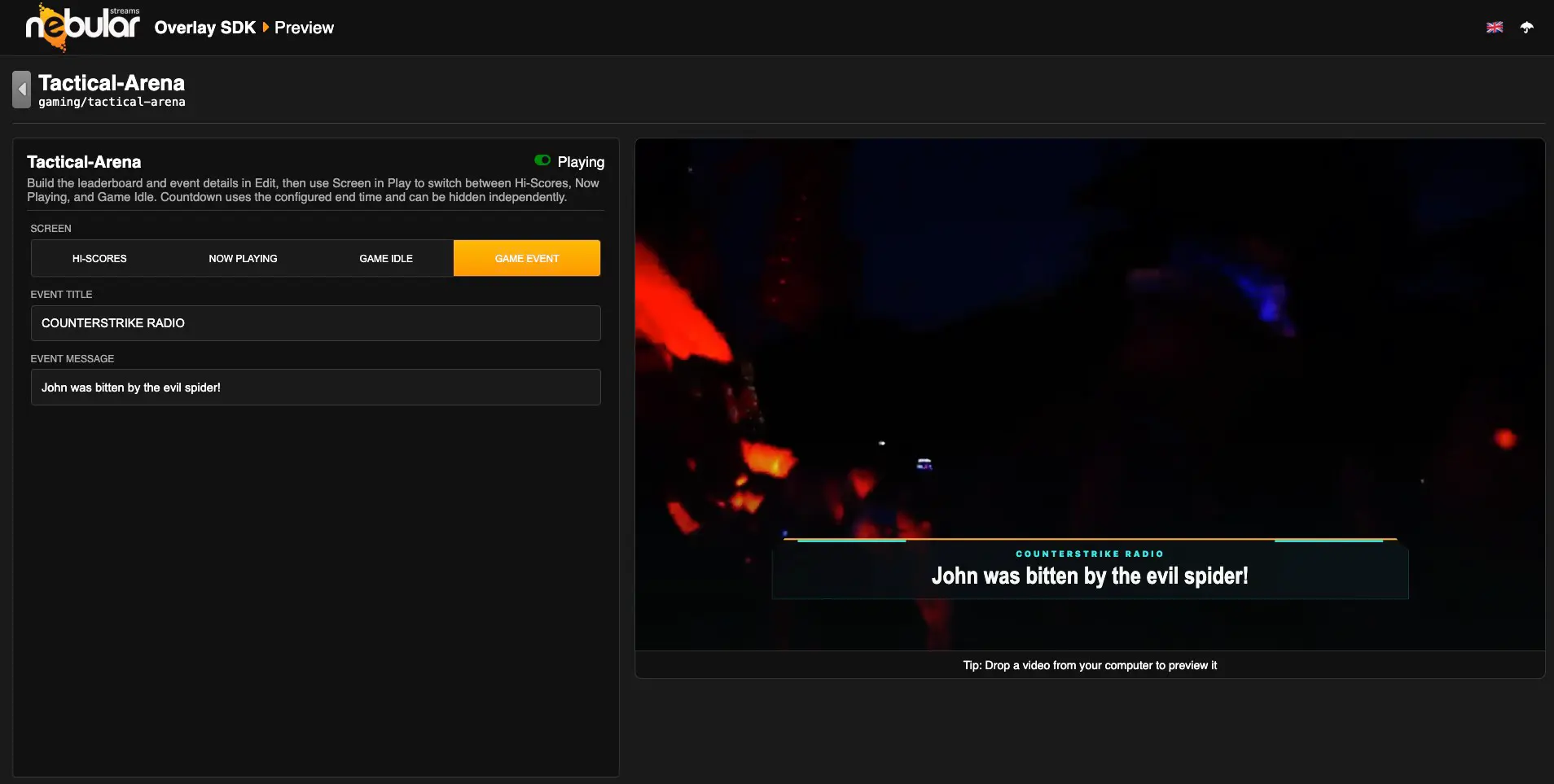
The local development toolkit for building and maintaining Overlay applications — with starter repositories, a live Studio-style preview, validation, and AI-assisted authoring.
Overlay Studio
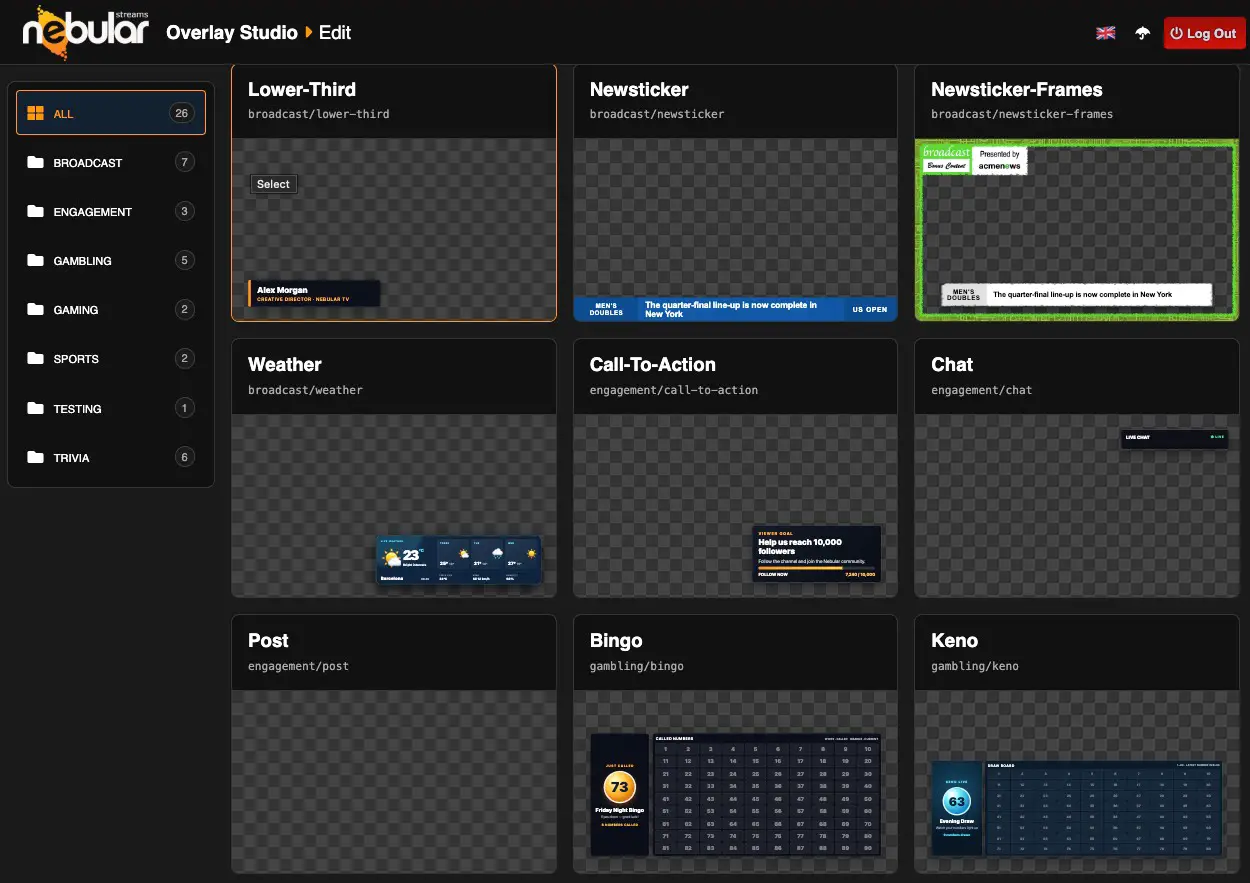
Nebular's management application for browsing application catalogues, configuring streams, controlling running sessions, and working with the real-time API.
Overlay Server
The production runtime. It manages application rendering, persistent state, live updates, and server-side composition alongside existing video-processing infrastructure.
Build applications locally with Overlay SDK, manage them with Overlay Studio, and run them through Overlay Server — or integrate the individual layers into your own development and streaming workflows.
From idea to running application
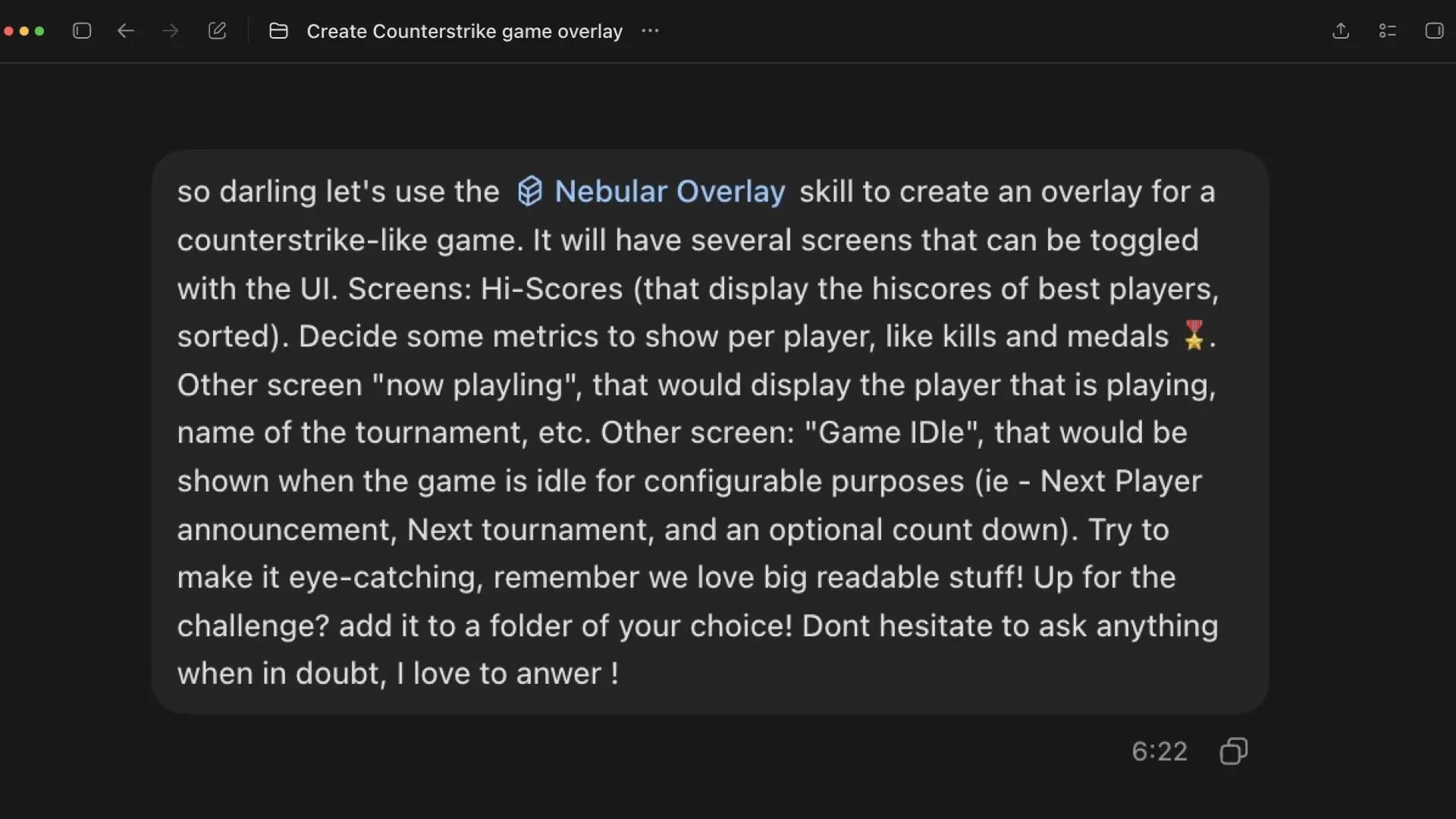
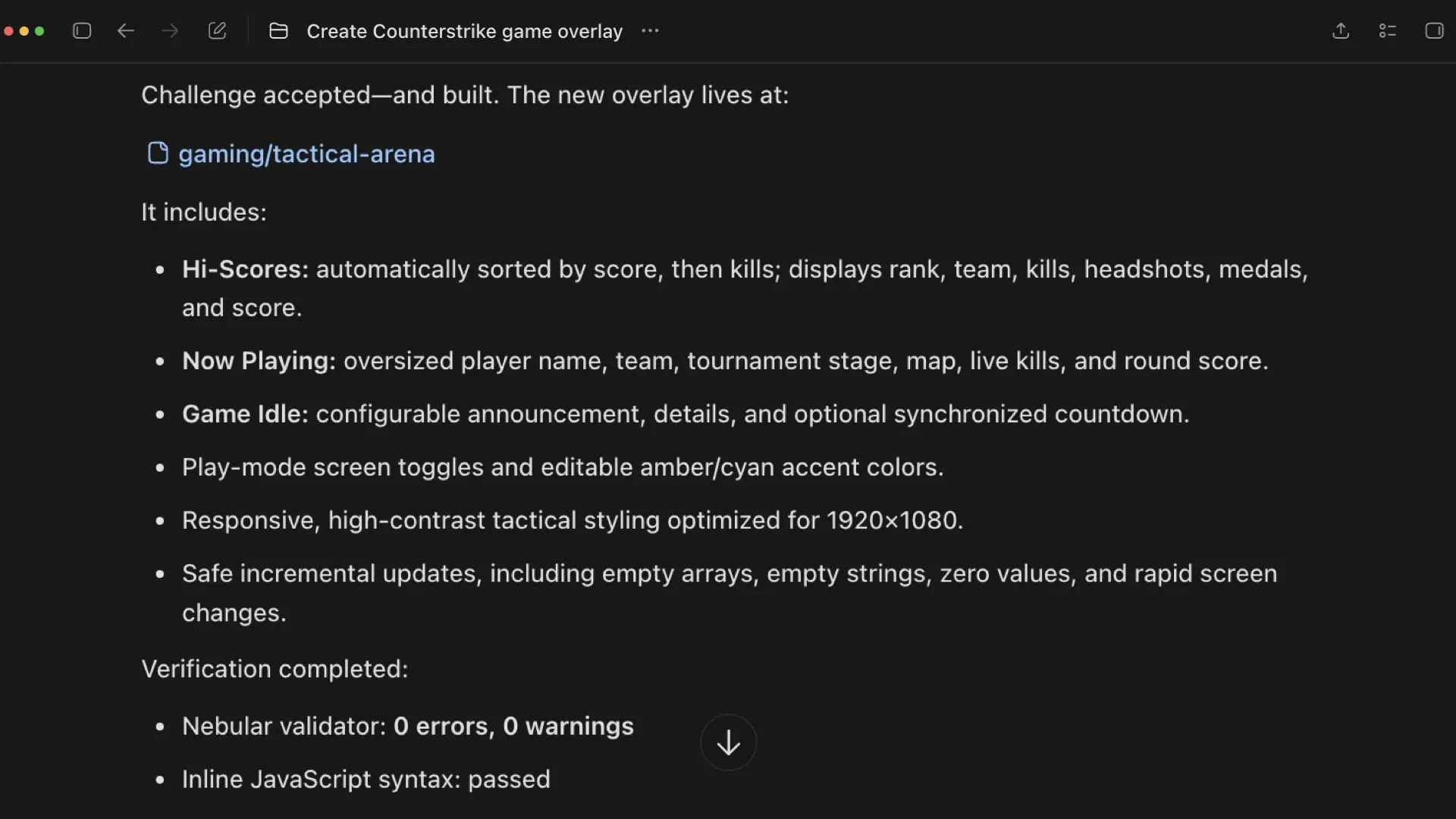
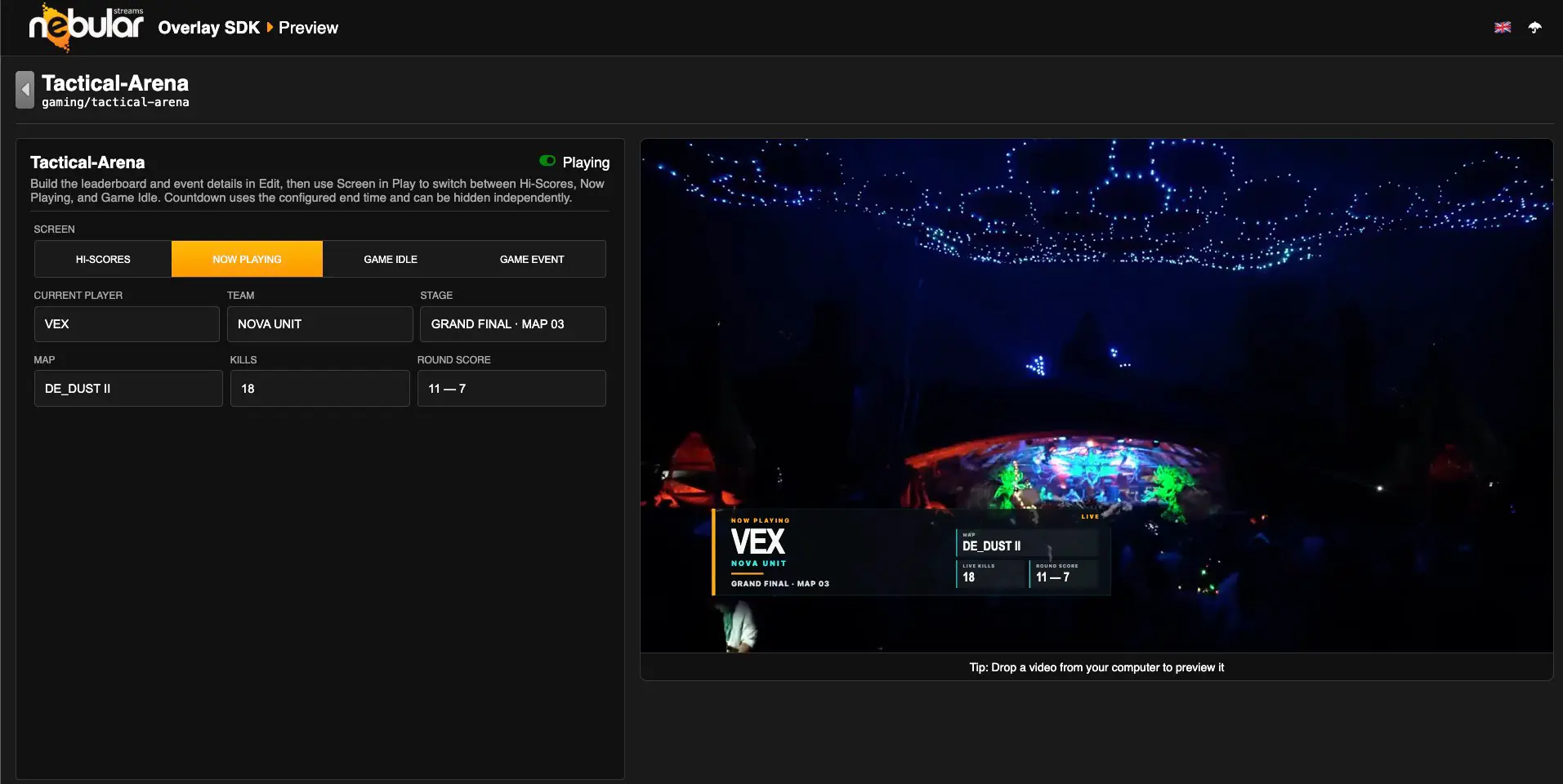
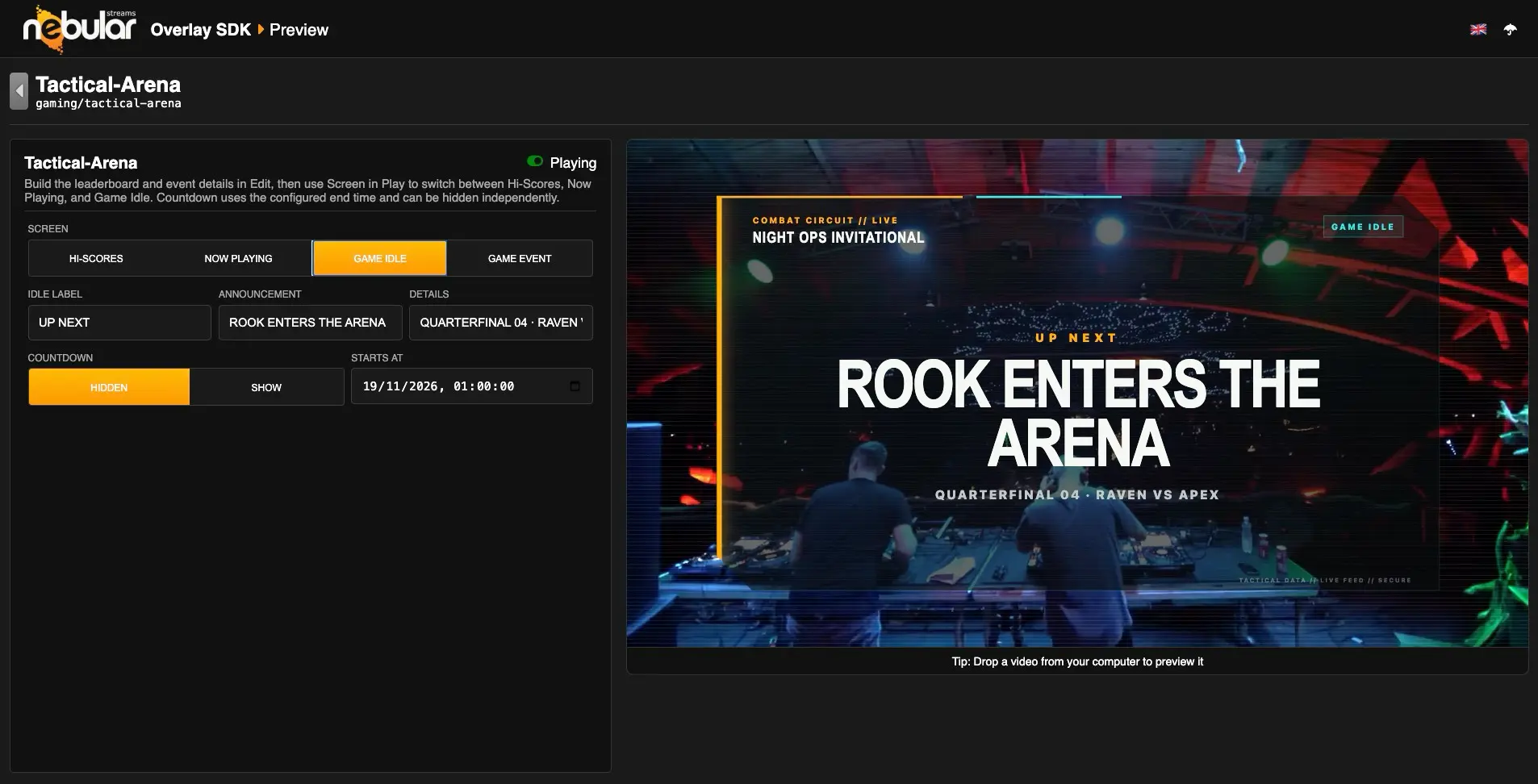
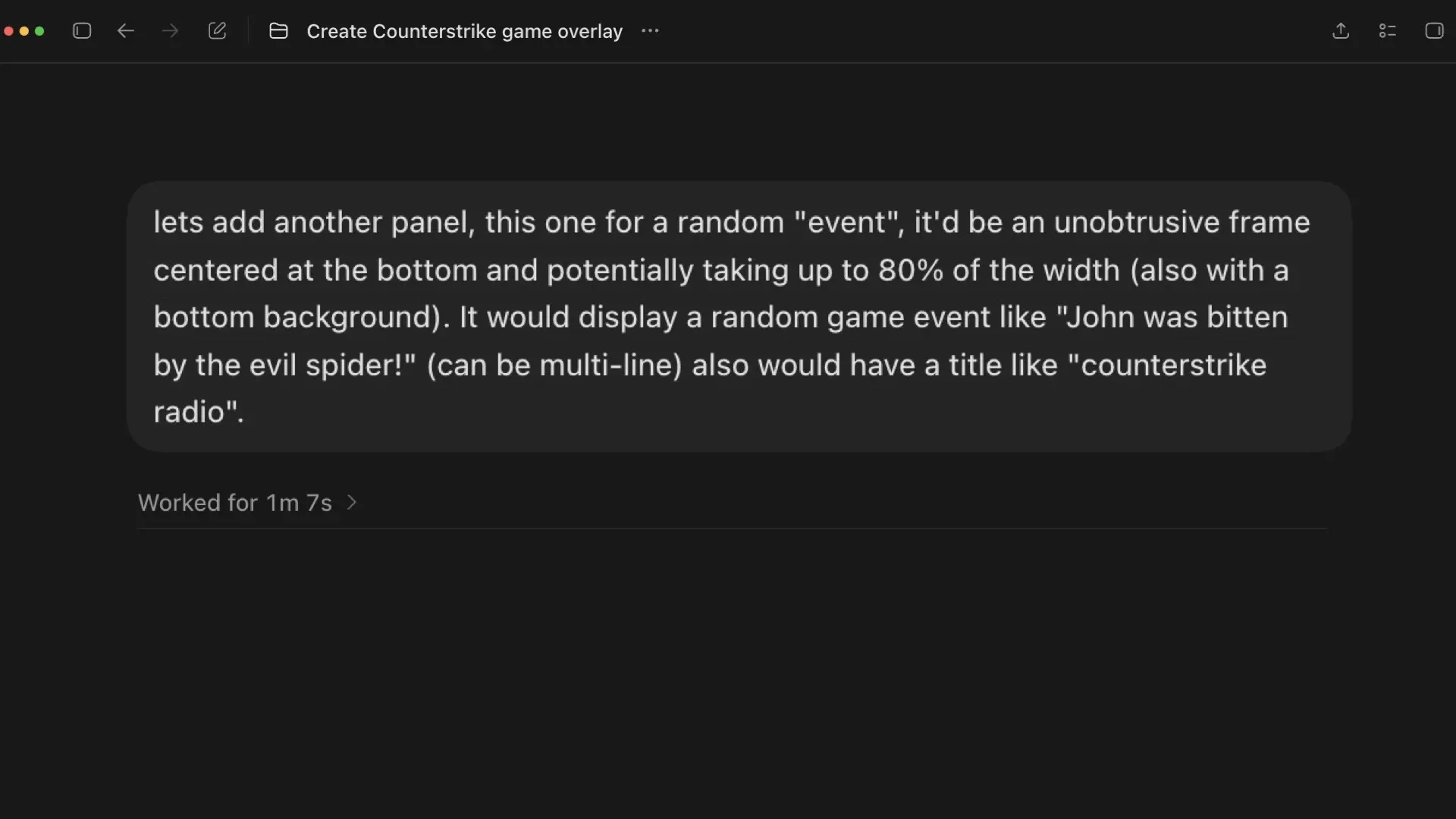
Create Overlay applications from code — or describe what you want. The Overlay SDK turns application development into a local, source-controlled workflow. Start from working examples, build or modify applications, inspect them instantly in a Studio-style preview, validate them against the Overlay application environment, and synchronize approved versions for production.
An included Codex skill understands the Overlay application model and can turn natural-language briefs into working applications, modify existing ones, and validate the result. The local preview exposes a development API parallel to production and reproduces the catalogue, controls, isolation boundaries, and update behavior applications use in Overlay Studio.
More than overlays
An overlay can be more than a graphic. Each overlay application can have its own interface, behavior, and state — allowing the same runtime to serve very different use cases.
Broadcast
Branding, lower thirds, breaking news, information layers, tickers, and other live production graphics.
Gaming & Betting
Roulette, lottery, bingo, game state, results, event-driven visualizations, and specialized gaming interfaces.
Engagement
Trivia, competitions, audience interaction, dynamic calls to action, and other experiences driven by live state.
Custom Applications
Tenants can maintain their own catalogues of HTML applications, with their own visual identity, behavior and data model.
The platform is intentionally generic. local SDK · HTML application runtime · real-time API · persistent state · isolated rendering · server-side composition · platform integration.
Obscene Studio
A live production environment for turning OBS streams into interactive experiences
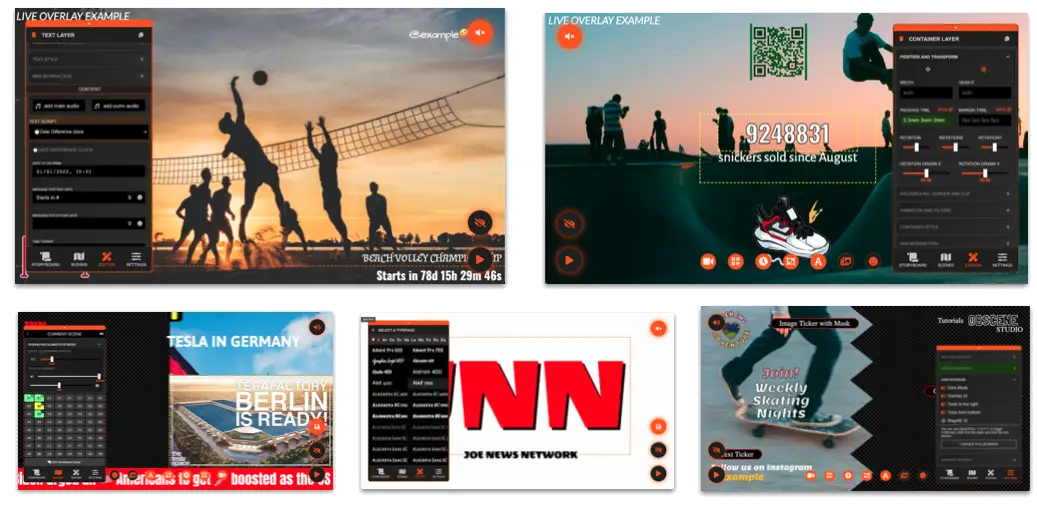
Obscene Studio is a complete production environment for live streamers using OBS. It brings graphics, transitions, sound, animation, video, stickers, interactive overlays and 3D scenes into a visual production environment built for live streaming.
https://obscene.studioBuilt for the production edge, Obscene Studio adds a playful, programmable layer around OBS. Scenes, effects and parameters can be controlled live from the screen or standard MIDI controllers and gamepads — turning a streaming setup into an expressive, hands-on production environment.
Nebular Worlds
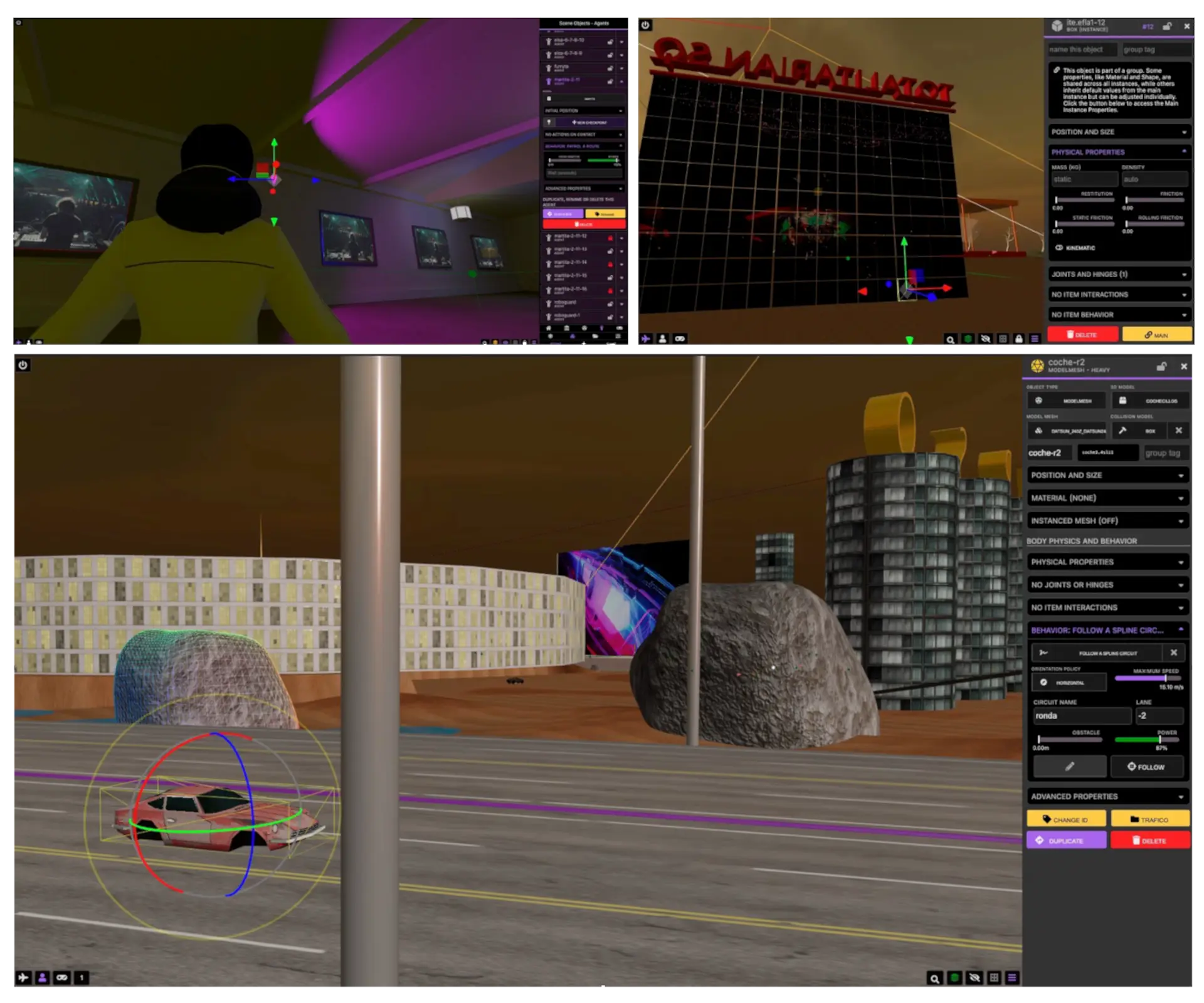
https://nebular.worldNebular Worlds is a platform for building and exploring shared 3D environments across virtual reality and traditional devices. Its visual editor and runtime make scenes, objects, interactions, and connected experiences part of the same programmable space.
Free Software
A collection of free utilities, tools, and software components developed at Nebular and made available for use in your own projects. Small, practical pieces of technology built to solve real problems — use them as they are, integrate them into your own systems, or adapt them to your workflow. Explore Free Tools
From the Lab
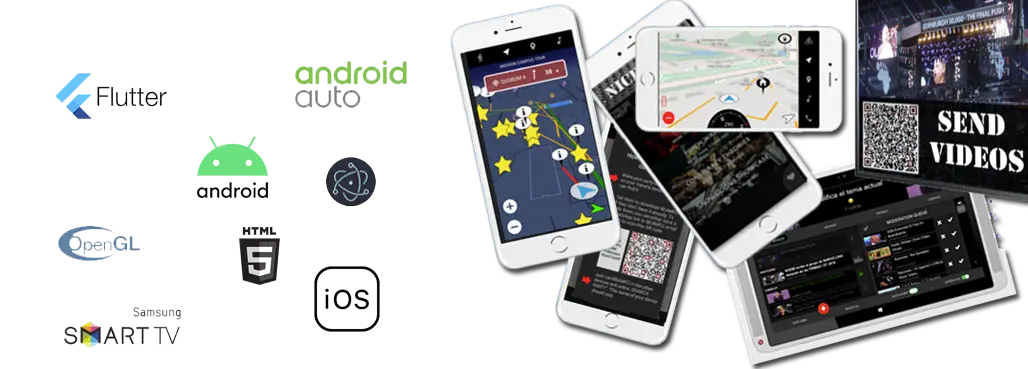
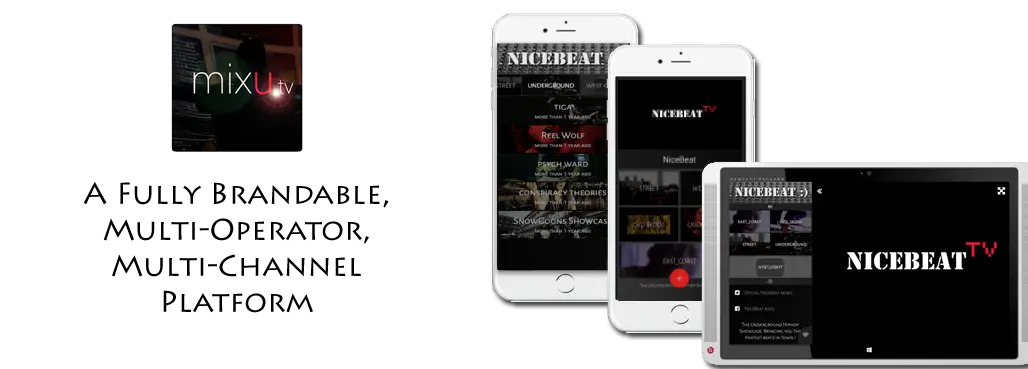
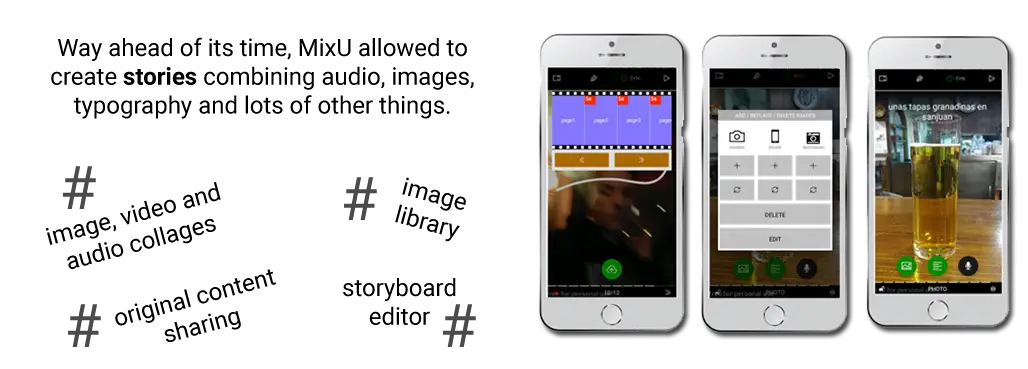
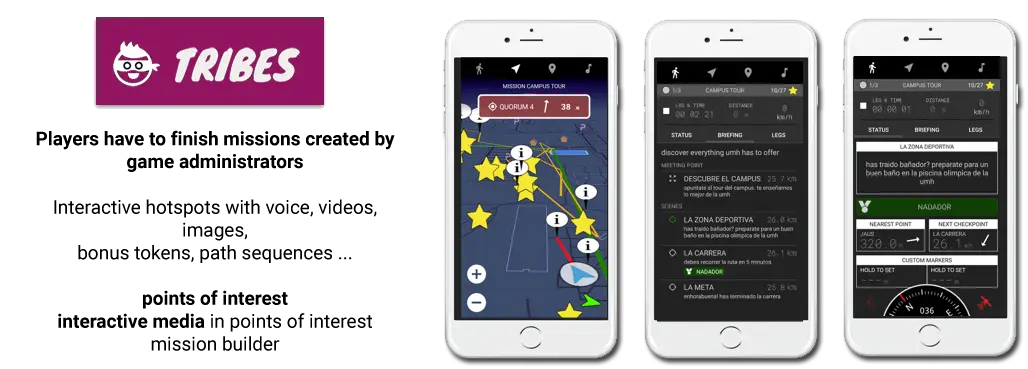
Nebular has spent more than two decades exploring the edges of media technology — live video, IPTV, social authoring, mobile applications, games, connected devices, real-time effects, and immersive interfaces. These are snapshots from earlier products and experiments: different technologies and eras, connected by the same interest in making media programmable, interactive, and alive.